ADVENTURES IN AUDIO
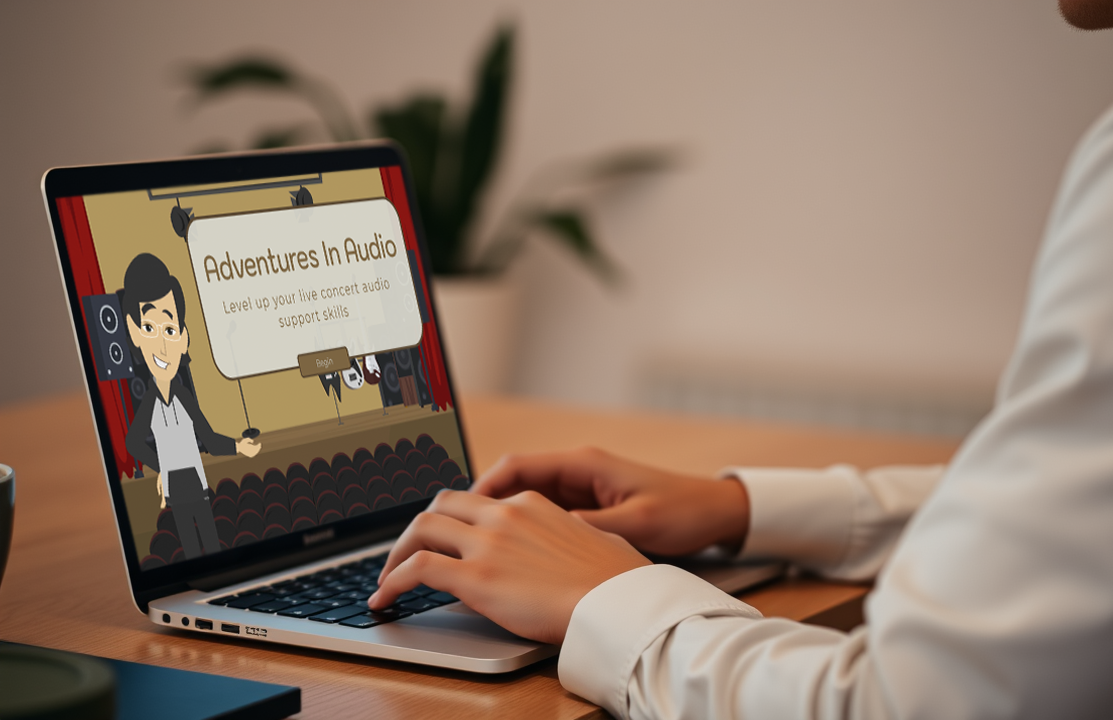
This scenario-based eLearning experience immerses learners in the world of live audio, equipping them with the skills to become competent, confident technicians.
With Adventures in Audio, they’ll navigate real-world challenges, gaining the confidence to create flawless live sound experiences.
AUDIENCE: Any level audio technicians needing skills in live event technical audio support.
RESPONSIBLILITIES: Instructional Design (action mapping, storyboarding, prototyping, development); Visual and audio design; character animation; development of assessments and feedback.
TOOLS USED: Articulate Storyline 360, Vyond, Figma, Adobe Photoshop, Google Docs, Chat GPT
The Problem and SolutioN
THE PROBLEM
Advanced Sounds, a growing live audio company, specializes in supporting medium to large venues, but struggled with technicians consistently setting up shows correctly and on time.
These challenges directly impacted their business, leading to delayed performances, unhappy clients, frustrated record labels, and lost contracts. To address this, they needed a targeted training solution that would improve technical accuracy and efficiency in live event setups.
The Solution
In this course, learners step into real-world audio challenges, gaining hands-on experience in a safe and structured environment where they can develop and refine their skills.
Key Benefits:
Enhanced Problem-Solving: By tackling realistic scenarios, learners build adaptability, critical thinking, and the ability to make quick, confident decisions.
Immediate Feedback: Scenario-specific guidance allows learners to recognize strengths and address areas for improvement in real time.
Interactive and Engaging: Branching scenarios, live feedback, and hands-on exercises keep learners actively involved, reinforcing essential skills.
Flexible Learning: Available anytime, anywhere, the course allows participants to train at their own pace and fit learning into their busy schedules.
Scalable and Consistent: Designed for individual learners and teams, this program provides a reliable and structured training experience at scale.
The Process
Preparation Phase
The preparation phase focused on understanding the company’s unique challenges and training needs.
Understanding the Challenges
In-depth interviews with Advanced Sounds’ technicians uncovered key obstacles in live audio management. Managing feedback, calibrating equipment, and adapting to unpredictable live dynamics emerged as critical challenges. These insights shaped the core focus of the training module.Defining the Audience
I designed this experience to meet the needs of both new hires building foundational skills and experienced technicians looking to refine their troubleshooting expertise.Setting Clear Goals
The objective was to create a training experience that is immersive, interactive, and equips technicians with the skills and confidence to handle the high-pressure demands of live audio management.
Iterative Design Phase
This phase focused on rapid prototyping and refining the module through continuous feedback.
Prototype First:
Using Articulate Storyline 360, I developed an initial prototype featuring realistic soundscapes, interactive decision points, and guided feedback loops to simulate real-world audio challenges.Scenario Storyboarding:
I designed each scenario to mirror real-life situations, from troubleshooting signal interference to managing equipment malfunctions before a live event.Visual Design:
Vyond animations and Figma mockups brought the training to life with visuals that accurately represented Advanced Sounds’ equipment and work environments.Feedback-Driven Iteration:
Technicians and leadership tested the prototypes, providing valuable feedback that refined the scenarios, visuals, and overall learning experience.
Iterative Development Phase
This phase focused on taking feedback and fine-tuning the module to make it practical , effective, and ready for real-world use.
Realistic Interactivity:
The module immerses learners in real-world troubleshooting scenarios, guiding them through resolving signal issues, balancing audio levels, and making critical on-the-job decisions.Feedback Integration:
Pilot testing insights led to key improvements, including optional hints, smoother navigation, and scenario paths that adapt to different decision-making styles.Real-Time Feedback:
Learners received immediate, actionable feedback during each scenario, sharpening their problem-solving skills and reinforcing real-world decision-making.
Implementation Phase
The implementation phase focused on getting the module into the hands of Advanced Sounds’ team quickly and smoothly, making sure it was ready to deliver real results from day one.
Pilot Testing:
I conducted a pilot run with a mix of new hires and experienced technicians to make sure the module was effective, intuitive, and aligned with real-world needs.Final Adjustments:
Feedback from the pilot phase led to final revisions, including enhanced audio cues for emphasis and clearer text instructions to improve usability.Deployment:
I uploaded the finished module to an LMS, making it easy for technicians to access the training whenever and wherever they needed.
Evaluation Phase
The final phase zeroed in on measuring the module’s impact and fine-tuning it to guarantee long-term success and relevance.
Feedback Collection:
I gathered feedback from surveys and learners to understand what worked well and where improvements could be made.Performance Metrics:
I used LMS analytics to track engagement, completion rates, and assessment results to see a clear picture of the training’s effectiveness.Ongoing Updates:
I set up a simple process to update the module with new technologies and scenarios, so it stays useful as Advanced Sounds continues to grow.
Design
In the Preparation phase, I used Action Mapping to figure out exactly what the audio technicians needed to handle the intense demands of live events.
I dug deep, asking practical questions: “What does troubleshooting success look to support a live performance?” and “What actions keep sound quality on track under pressure?” Interviews with the team revealed key challenges like signal disruptions, rapid equipment calibration, and managing high-stakes sound dynamics.
From there, I identified the critical skills to address customer complaints and rebuild trust. This work set the stage for creating interactive, hands-on training tailored to the real challenges technicians face every day.
I designed a scenario-based storyboard that placed learners in the driver’s seat of real-world challenges. Using a narrative-driven, ‘choose your own adventure’ format, the training simulated high-pressure environments where decisions carried real consequences.
The story followed an audio technician tasked with troubleshooting live events, from fixing signal disruptions to balancing audio levels under time constraints. Each decision had consequences—success advanced the training, while mistakes triggered setbacks and a chance to try again. A mentor character offered guidance, helping learners refine their skills and build confidence.
This method went beyond basic training, equipping technicians to think on their feet and manage the demands of live audio with precision and confidence. It’s relevent, immersive, engaging, and designed for real-world success.