ADVENTURES IN AUDIO
This scenario-based eLearning project is designed to equip learners with the essential skills and knowledge needed to become proficient audio technicians at live events. From setting up equipment to troubleshooting sound issues during performances, this interactive module immerses learners in real-world challenges, preparing them to deliver flawless live audio experiences.
AUDIENCE: Newly hired audio technicians and other employees seeking to enhance their skills in live event technical audio support.
RESPONSIBLILITIES: Instructional Design (action mapping, storyboarding, prototyping, and development); Visual and audio design; Animation for interactive scenarios; development of assessments and feedback mechanisms.
TOOLS USED: Articulate Storyline 360, Vyond, Adobe Photoshop, Google Docs, Chat GPT
The Problem and SolutioN
The Problem
Delivering top-tier audio for live events demands a unique blend of technical expertise, rapid decision-making, and the ability to troubleshoot under intense pressure. Yet, traditional training often falls short, lacking the realism needed to prepare learners for the high-stakes challenges they’ll face in the world of live sound management.
The Solution
An interactive, scenario-driven eLearning module built to immerse learners in the real-world pressures of live events, where troubleshooting audio, adjusting equipment, and managing sound dynamics are critical.
Key Benefits:
Realistic Practice: Hands-on scenarios challenge learners to solve audio issues and navigate the complexities of sound production in a safe, risk-free environment.
Improved Problem-Solving: By focusing on realistic challenges, the course enhances critical thinking, adaptability, and the ability to make quick, effective decisions during high-pressure situations.
Ongoing Feedback: The course provides immediate, scenario-specific feedback, helping learners understand what they’re doing right and where they need to improve.
Interactive Engagement: Hands-on exercises, branching scenarios, and live feedback ensure that learners stay actively involved and retain critical skills.
Flexible Access: Designed for modern learners, the course is accessible anytime, empowering participants to train at their own pace and convenience, wherever they are.
Scalable Training: Ideal for individuals or teams, this program ensures a consistent and reliable learning experience, no matter the size of the audience.
The Process
Preparation Phase
The preparation phase was all about understanding the company’s unique challenges and training needs.
Understanding the Challenges:
Interviews with Advanced Sounds’ technicians revealed key pain points: managing feedback, calibrating equipment, and preparing for live audio dynamics under pressure. These insights defined the foundation of the module.Defining the Audience:
The training had to cater to both new hires needing foundational skills and experienced technicians refining advanced troubleshooting techniques.Goal Setting:
The aim was to design a training experience that’s immersive, interactive, and capable of preparing technicians for the high stakes of live audio management.
Iterative Design Phase
This phase focused on rapid prototyping and refining the module through continuous feedback.
Prototype First:
Using Articulate Storyline 360, I created an initial prototype featuring realistic soundscapes, interactive decision points, and guided feedback loops.Scenario Storyboarding:
Scenarios were built to replicate real-world challenges, like resolving signal interference or managing equipment malfunctions in preparation for live events.Visual Design:
Using Vyond animations and Figma mockups, I created visuals that closely mirrored Advanced Sounds’ equipment and environments.Feedback-Driven Iteration:
Technicians and leadership tested the prototypes, and their feedback helped improve the scenarios, visuals, and overall user experience.
Iterative Development Phase
This phase focused on taking feedback and fine-tuning the module to make it practical , effective, and ready for real-world use.
Realistic Interactivity:
The module was designed with scenarios to replicate real-world troubleshooting, focusing on resolving signal issues and balancing audio levels, just like on the job.Feedback Integration:
Based on pilot testing, I added optional hints, improved navigation, and adjusted scenario paths to support different decision-making styles.Real-Time Feedback:
Learners received immediate, actionable feedback during scenarios, enhancing their problem-solving skills.
Implementation Phase
The implementation phase was all about getting the module into the hands of Advanced Sounds’ team efficiently and effectively, making sure it was ready to deliver real results from day one.
Pilot Testing:
I conducted a pilot run with a mix of new hires and veteran technicians to assess the module’s effectiveness and usability.Final Adjustments:
Feedback from the pilot phase led to final revisions, like adding audio cues for emphasis and improving text instructions to make them clearer.Deployment:
The finished module was uploaded to an LMS, making it easy for technicians to access the training whenever and wherever they needed.
5. Evaluation Phase
The final phase zeroed in on measuring the module’s impact and fine-tuning it to guarantee long-term success and relevance.
Feedback Collection:
I gathered feedback from surveys and learners to understand what worked in the module and what could be improved.Performance Metrics:
I used LMS analytics to track engagement, completion rates, and assessment results to see how effectively the training achieved its goals.Ongoing Updates:
I set up a simple process to update the module with new technologies and scenarios, so it stays useful as Advanced Sounds grows and evolves.
Design
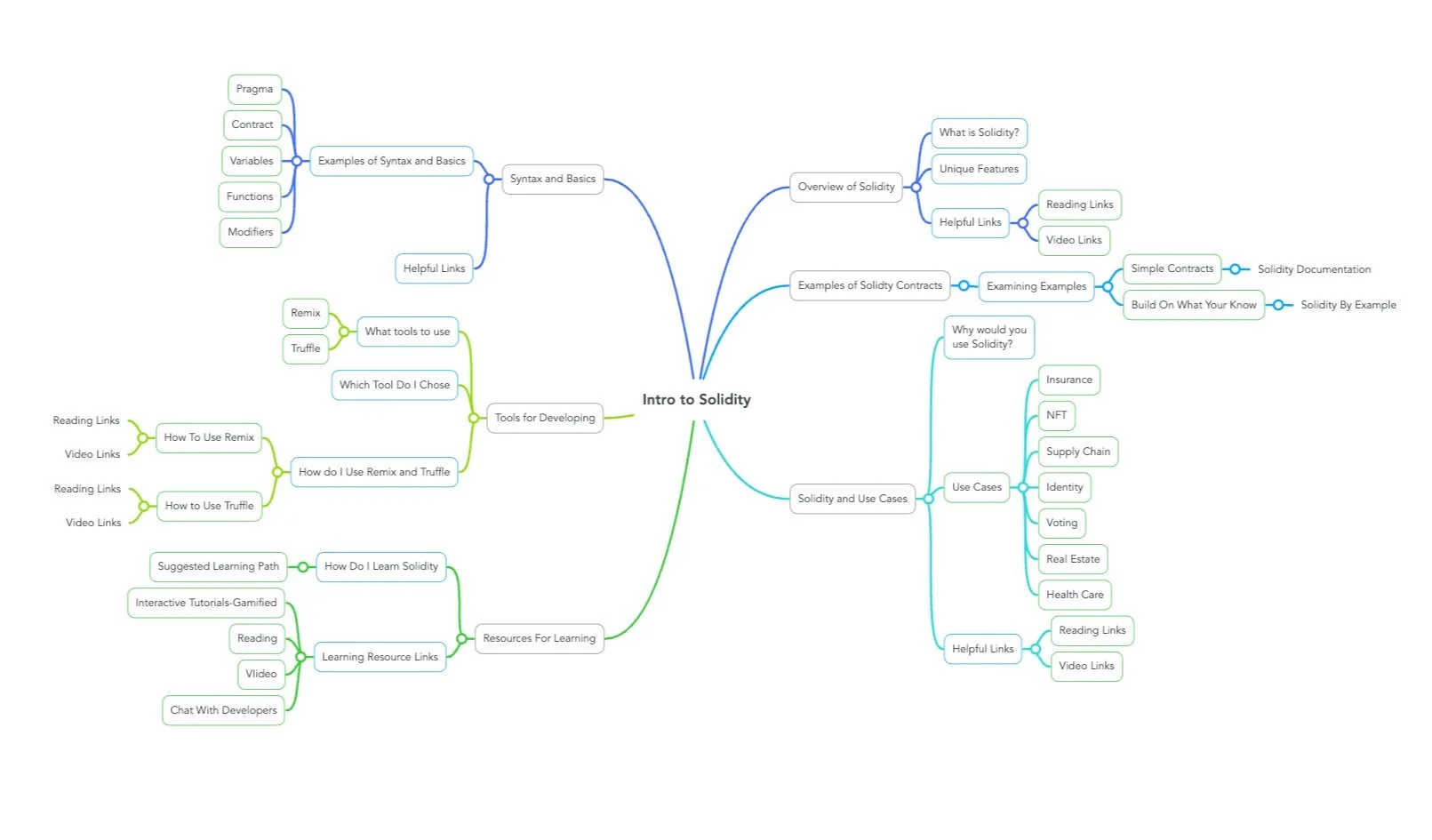
I started by developing a mind map to structure the content effectively, ensuring everything tied back to the learning objectives. This kept the material focused and clear throughout development.
By leveraging adult learning theories, particularly cognitive load theory, I simplified complex ideas into digestible parts. I also emphasized the career benefits of mastering Solidity, such as creating secure smart contracts and advancing in blockchain development.
To drive engagement, I integrated interactive coding, gamification, and videos, making the learning experience both dynamic and purposeful.
Development
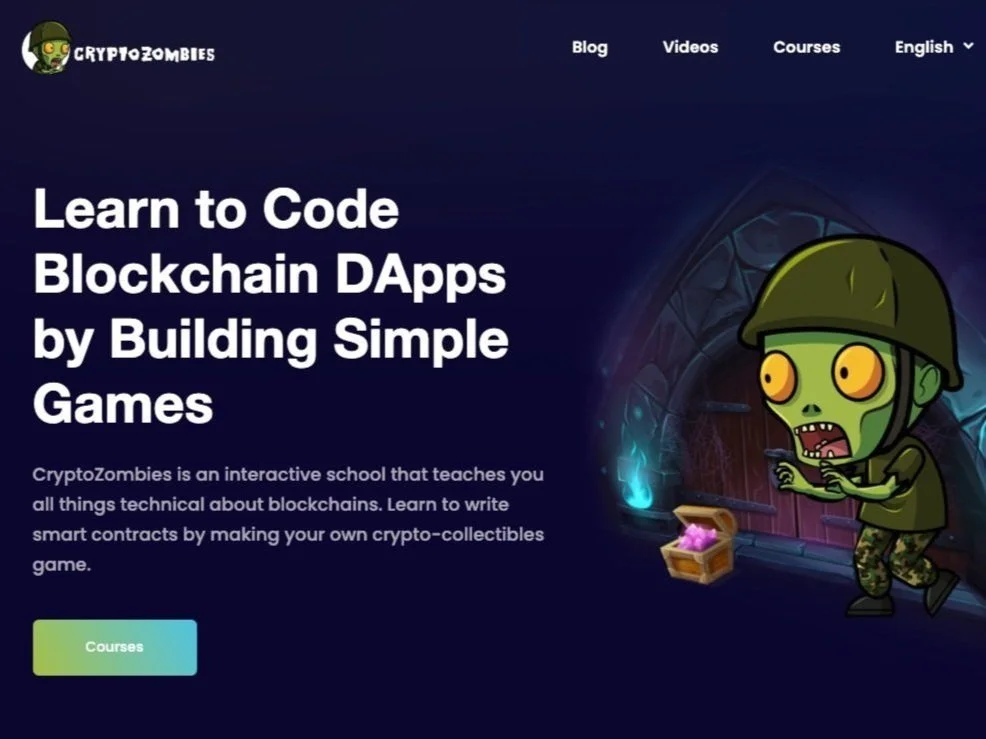
During the development phase, I used Articulate Rise to create engaging lessons. Each lesson was logically organized, with clear examples and explanations. I followed a structured approach, incorporating multimedia elements like text, images, videos, and links to appeal to various learning styles and keep learners engaged.
I also worked closely with subject matter experts and stakeholders to ensure the content was accurate, relevant, and up-to-date. I also refined activities to align with the module's learning objectives.
Implementation
During the implementation phase, the software development team manager assigned and facilitated the learning process, with content hosted on the in-house LMS.
I made minor adjustments based on the manager's feedback and observations to make sure the learning objectives were fully met.
Evaluation
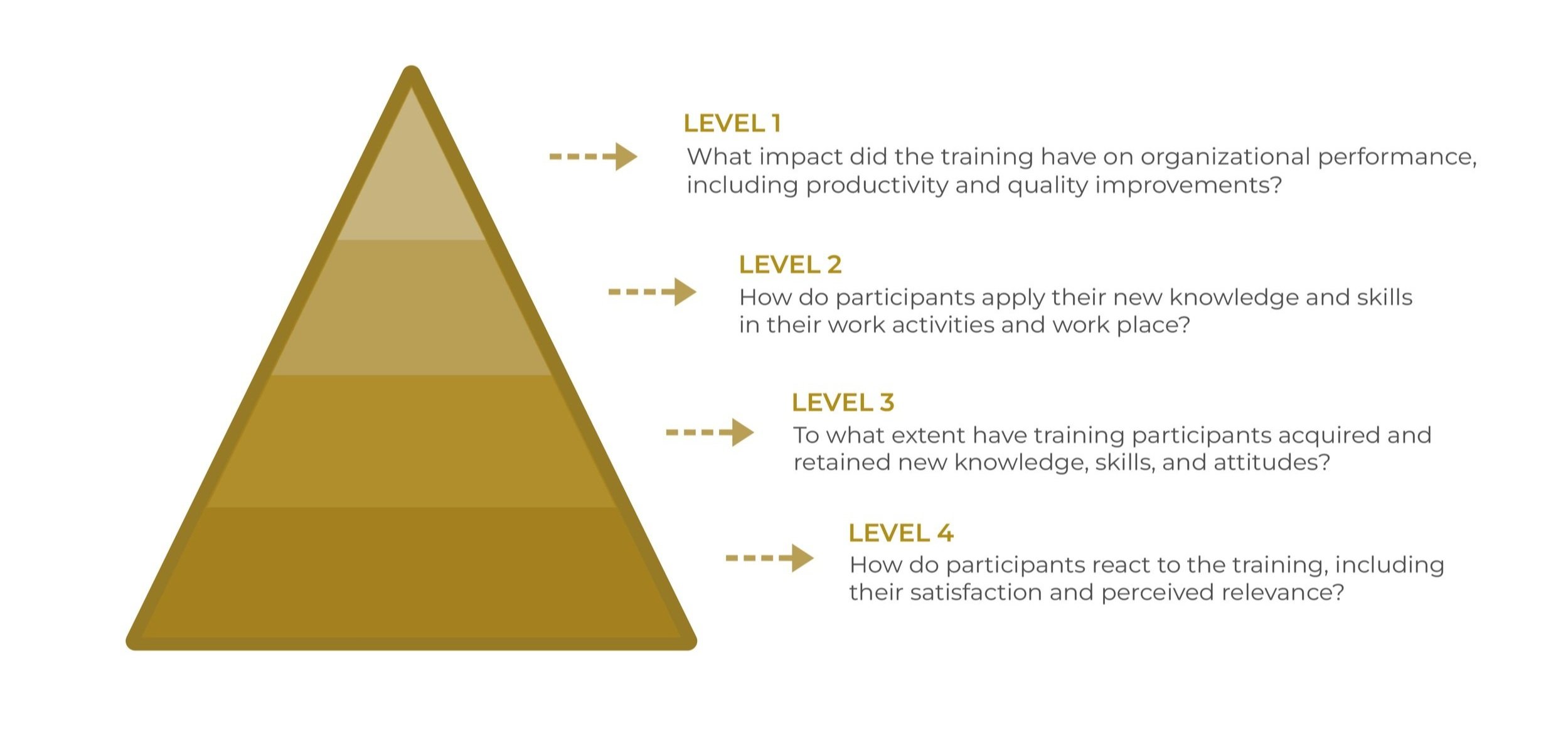
I used the Kirkpatrick Model’s four levels of evaluation—Reaction, Learning, Behavior, and Results—to directly measure how well the module performed. This framework eliminates guesswork, relying on hard data to drive smarter decisions and better outcomes.
By gathering user feedback, tracking knowledge retention, observing behavior changes, and quantifying results, I assessed the real-world effectiveness of the training. This process wasn’t just about evaluation; it was about action—tweaking and refining the module to maximize its impact and ensure it hit its goals with precision.
Level 1, Reaction: I used surveys and evaluations to get immediate feedback from learners. This was about understanding engagement and satisfaction—gauging whether the content connected with the audience on a meaningful level.
Level 2, Learning: I measured knowledge growth with pre- and post-tests. This was a straightforward way to quantify how much the learners actually gained, ensuring the module was effective in delivering actionable skills.
Level 3, Behavior: Managers observed new hires as they applied their skills—writing and deploying smart contracts. This provided real-world validation of the module’s impact on day-to-day tasks in blockchain development.
Level 4, Results: I analyzed metrics like completion rates, engagement, and supervisor feedback to assess organizational impact. It’s about understanding the broader system, ensuring the training delivers real, measurable value at scale.