ADKAR THEORY 101

MasterING Change MANAGEMENT One Step at a Time
This interactive module breaks down the ADKAR model into clear, actionable steps. Interactive exercises and a practical quiz reinforce key concepts, equipping learners to lead change with confidence. Real-world scenarios in the quiz bring the framework to life, making the change easier to apply in any organization.
AUDIENCE: Managers who are unfamiliar with the principles of change management
RESPONSIBLILITIES: Instructional design, E-learning development, visual design, prototyping
TOOLS USED: Articulate Storyline 360, Adobe Photoshop, Adobe Illustrator, Google Suite
STORYLINE SKILLS: Layers, triggers, variables, questions banks, drop targets, conditional interactivity.
The Problem and SolutioN
THE PROBLEM
As a software company implemented new tools to optimize operations, leadership encountered a key obstacle: the lack of a structured adoption strategy. Without a solid foundation in change management principles, managers struggled to effectively guide their teams through the transition, impacting overall success.
THE SOLUTION
I created an interactive module that introduced the ADKAR theory model as a structured change management method. Awareness, desire, knowledge, ability, and reinforcement (ADKAR) were broken down into lessons that managers could immediately apply in their roles.
Scenario-based learning: Instead of passively reviewing concepts, managers actively engage with workplace challenges through a scenario-based quiz. They can sharpen their decision-making skills and reinforce their ability to apply ADKAR principles in real situations.
Built on adult learning principles: The module takes a practical approach, breaking down complex concepts into manageable sections. Through reinforcement and real-time application, learners stay engaged while strengthening retention.
Empowering leadership for lasting change: By the end of the module, managers gain the confidence and skills needed to drive adoption, support their teams through transitions, and implement sustainable change strategies that align with business goals.
Storyline and Design Notes
CUSTOM MENU
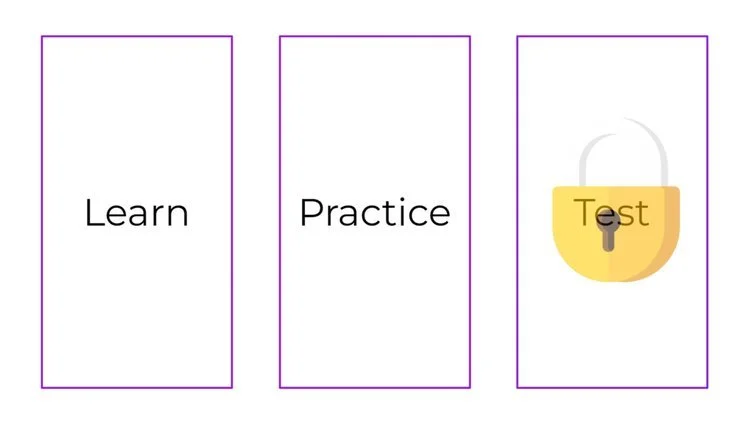
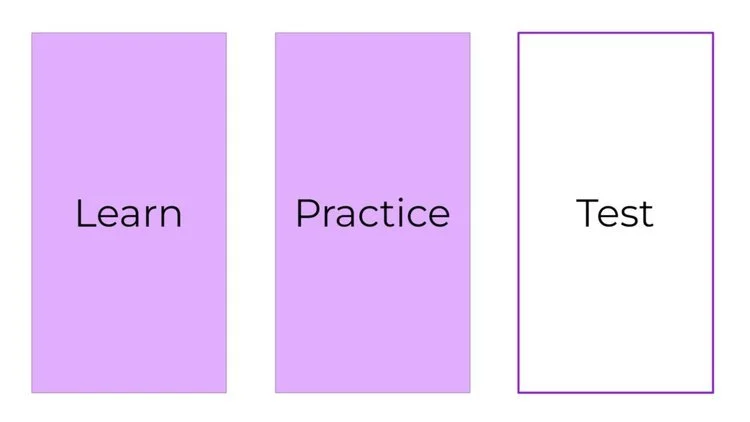
I built a custom menu for the module’s home page, using layers, triggers, and variables to create a dynamic, responsive experience. Everything was structured into clear, digestible sections, making it easier for learners to process information and stay on track.
I added built-in progress tracking so learners could easily see their advancement. As they moved forward, sections changed from white to light purple, giving them a clear visual cue of where they were in the module. To create a more structured learning path, I made the test section stay locked until learners completed both the Learn and Practice sections. This way, they were fully prepared before progressing to the next steps.
TAB INTERACTION
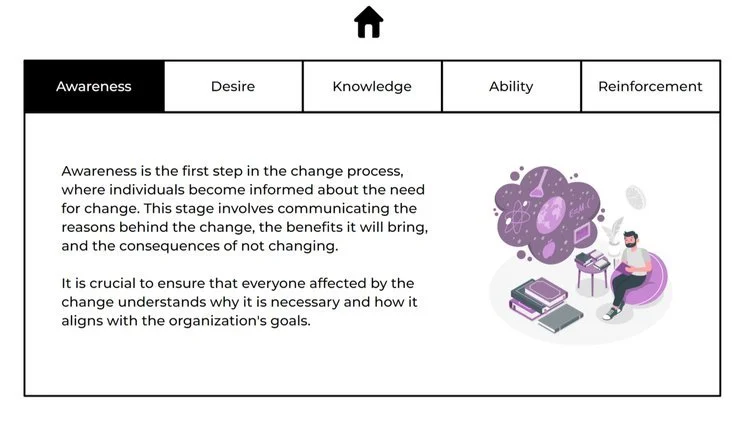
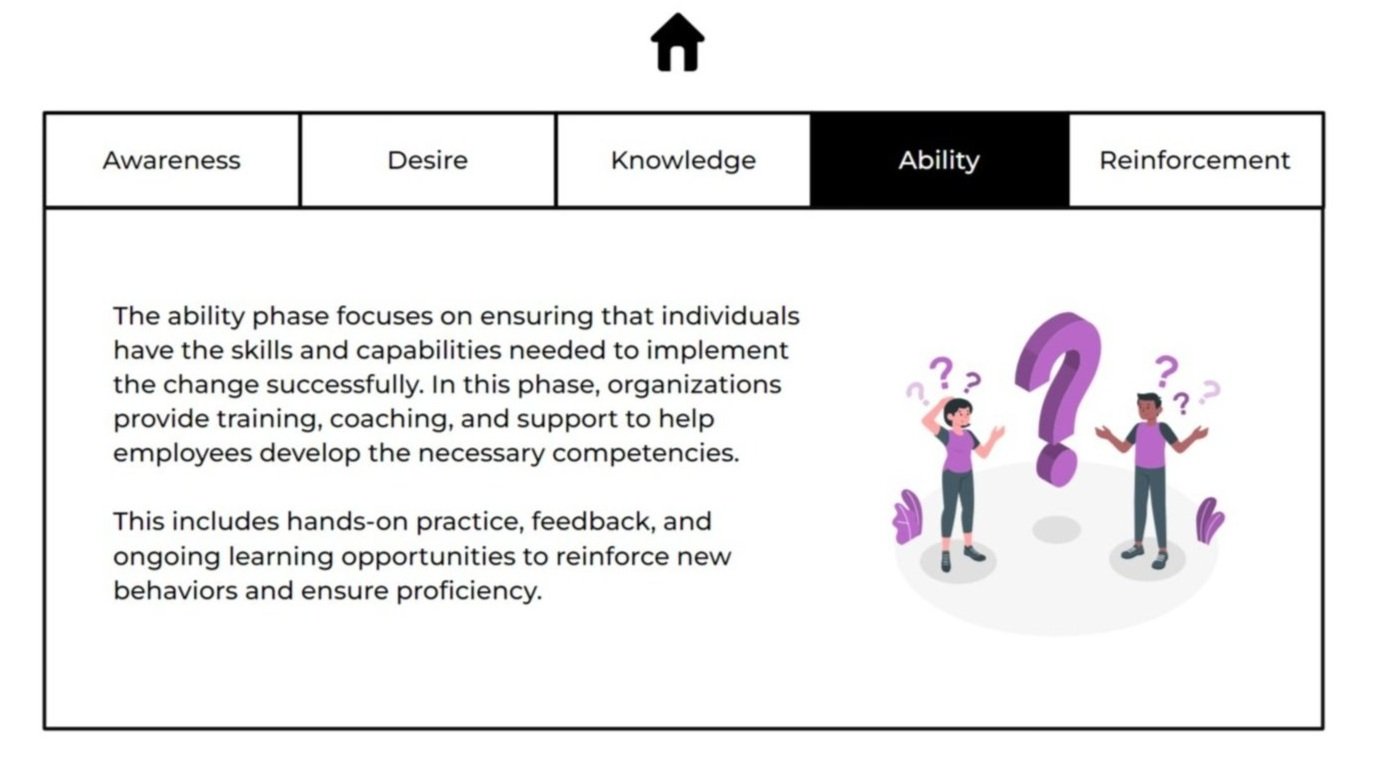
I designed a tab interaction using layers, triggers, and states to present a structured introduction to ADKAR change management. With clear labeling and purposeful visual cues, I designed an intuitive experience that kept learners engaged without unnecessary distractions.
To enhance comprehension and retention, I applied progressive disclosure, revealing information in small, logical steps. This approach helped break down complex ideas, making information more manageable and easier to absorb.
Drag and Drop
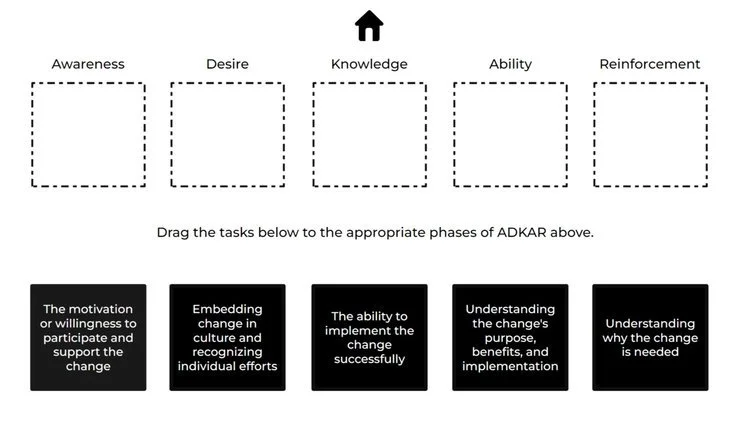
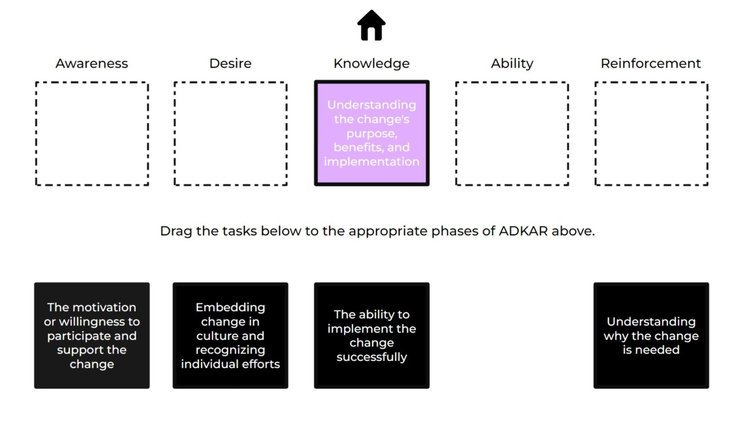
I created a drag-and-drop activity designed to shift learning from passive to interactive. By integrating layers, triggers, states, and drop targets, I created an intuitive interaction where learners actively work with the content, reinforcing key concepts through hands-on engagement.
To make the experience even more impactful, I built in instant feedback and retry options. This way, learners can correct mistakes in real time, refining their understanding with each attempt. The result? A more meaningful and applicable learning experience.
Quiz
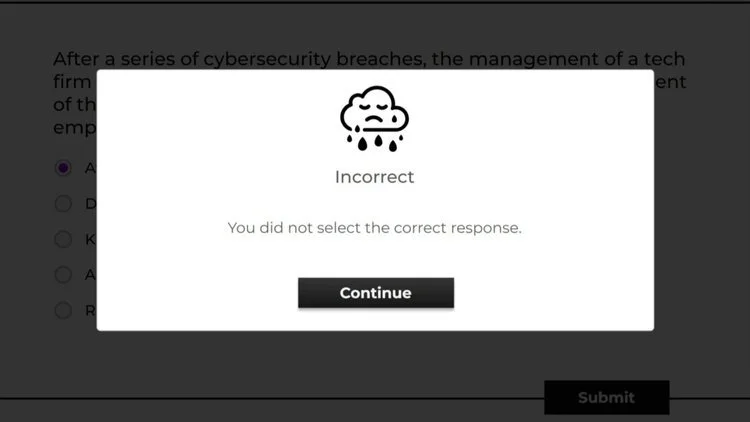
I designed the quiz as real-world scenarios to help learners apply their knowledge in situations they could face on the job. Rather than focusing on simple recall, the quiz encouraged critical thinking and decision-making, reinforcing key concepts.
To keep it engaging and fair, I created a randomized question bank, making each attempt unique. Custom feedback, complete with emojis, added interactivity to the process.
Once finalized, the module was published as a SCORM package and synced with the LMS, providing detailed insights into learner progress, strengths, and areas for growth.